When a Small Specialist Store Is a Better Choice Than a Global Retailer
Global retailers are useful when price, fast delivery, easy comparison, and broad availability matter most. A small specialist store becomes more valuable when the purchase requires detailed product knowledge, unusual specifications, compatible accessories, or support after the sale.
Store size alone does not guarantee better service or higher quality. Some specialist shops have knowledgeable staff and carefully selected stock, while others carry a narrow range at higher prices. The practical question is whether the retailer offers a meaningful advantage for the product you need.
Before buying, compare the exact model, seller authorization, warranty coverage, return policy, delivery cost, and available support. A specialist store is the better choice when its expertise or product depth reduces the risk of purchasing the wrong item.
Specific Cases Where You Should Choose a Small Specialist Store
Specialist retailers generally focus on a limited number of product categories. This narrower focus can allow them to provide a deeper assortment and more detailed assistance within those categories. BCG identifies deep assortment, in-house expertise, and richer in-store experiences as potential strengths of specialty retail, although these advantages depend on how well the individual store operates.
When You Are Looking for Unique Products or Un-Mainstream Trends
A specialist store may carry products that are difficult to find through a general retailer, including small-batch goods, replacement components, regional brands, discontinued accessories, and products designed for a narrow use case.
Large retailers do not exclusively sell mass-market items, and their online marketplaces may contain an enormous range. The problem is that unusual products can be difficult to evaluate when they are mixed with third-party listings of inconsistent quality.
A focused shop may make discovery easier by limiting its catalog to products relevant to one audience. Retail assortment research also distinguishes between broad selection across many categories and depth within one category. A specialty store can be narrow overall while still offering many variations of the product its customers actually need.
This advantage matters when you are searching for an uncommon size, material, technical standard, color, regional edition, or design that a general store does not regularly stock.
When You Need In-Depth Consultation from High-Level Experts
Specialist assistance is most valuable when a wrong purchase would be expensive or difficult to correct.
Examples include matching an audio amplifier with speakers, selecting climbing equipment for a specific activity, confirming whether a replacement component fits an older device, or choosing coffee equipment that suits a particular brewing method.
Do not assume every employee is an expert merely because the store describes itself as specialist. Ask precise questions:
- Which specifications determine compatibility?
- What are the practical differences between two models?
- Which accessories are required?
- What limitations should the buyer know?
- How are repairs or warranty claims handled?
Useful staff should be able to explain trade-offs rather than automatically recommend the most expensive product. Research on traditional shopping streets has found that personal attention can be an important reason consumers prefer smaller retailers, but the quality of that attention still varies by business and employee.
When Shopping for Niche Categories or Specialized Hobbies
A general retailer may sell the main product but omit the surrounding parts needed to use, maintain, repair, or upgrade it.
A specialist model shop, for example, may carry paints, tools, replacement decals, adhesives, and scale-specific parts. A musical instrument store may provide strings, reeds, cases, maintenance supplies, setup services, and compatible replacement hardware. A bicycle shop may stock components and offer fitting or installation.
This category-level depth can be more useful than the total number of products on the retailer’s website. It also makes it easier to compare variations designed for different skill levels or technical requirements.
A global retailer may still be the better option for a standardized item with a clearly known model number. The specialist advantage increases when the buyer needs help assembling a complete system rather than purchasing one isolated product.
When You Value Quality and Aesthetic Curation Over Cheap Mass-Market Goods
Curation means the retailer has deliberately selected a smaller set of products for a defined audience. It does not mean every stocked item has passed an independent quality test.
A well-run specialist store may evaluate products based on durability, design, repairability, materials, compatibility, supplier reliability, or customer feedback. This reduces the time required to sort through thousands of similar listings.
Before relying on that curation, examine how transparent the retailer is. Strong product pages should explain why an item is stocked, who it suits, what it does poorly, and how it differs from alternatives. A store that publishes only promotional descriptions may offer no more useful filtering than a large marketplace.
Curation is most valuable when your priorities are difficult to express through basic filters, such as tactile quality, long-term repair support, unusual design, or compatibility with an existing collection.
When You Desire a Personalized Customer Service Experience
A small store may be able to maintain continuity between the sale and later support. The same employee who recommended the product may also help with setup, replacement parts, repairs, or a warranty claim.
Personalized service is not exclusive to small businesses. Large retailers can offer well-trained staff, generous policies, and sophisticated customer-service systems. Small retailers can also be understaffed, slow to respond, or dependent on one owner.
Evaluate the actual service before purchasing. Check whether the store answers technical questions clearly, provides written quotations, identifies delivery dates, and explains what happens when a product is defective.

Direct Comparison: Small Specialist Store vs. Global Retailer
| Evaluation Criteria | Small Specialist Store | Global Retailer |
|---|---|---|
| Product Depth | May carry more variations, parts, and specialist brands within a narrow category | Usually covers more categories and may offer extensive online inventory |
| Consultation Quality | Can provide detailed advice when staff have genuine category experience | Support is often standardized, although some departments have trained specialists |
| Trend Agility | May test small brands or limited products without a large national rollout | Can introduce trends at scale but may require larger supply volumes and formal vendor processes |
| Curation Quality | May select products around a specific use case or customer group | Offers more choice, but buyers may need to evaluate more listings and third-party sellers |
| Customer Care | May offer continuity and flexible problem-solving | Often provides longer support hours and standardized processes |
| Pricing & Discounts | May charge more because of lower purchasing volume or added services | Often competes strongly on price, promotions, delivery, and bundled membership benefits |
The table describes common tendencies, not guaranteed differences. BCG notes that specialty retailers often carry deeper category assortments, but this creates its own inventory challenges because long-tail products can sell slowly and may not be stocked at every location.
Why Do Small Specialist Stores Catch Trends and Offer Unique Products Faster Than Hypermarkets?
Small stores do not always identify trends first. Their advantage appears when the owner has strong supplier relationships, follows a focused customer community, and can purchase small quantities without needing a nationwide rollout.
Operational Agility
A smaller business may have fewer approval layers when testing a new product. The owner can sometimes place a trial order, display a local maker’s work, or adjust the catalog after direct customer requests.
The claim that a boutique can always place a product on its shelves within 24 hours is unrealistic. Import requirements, product testing, supplier lead times, minimum orders, labeling rules, and cash-flow limits can delay a launch.
Large retailers may move more slowly in some situations because they need enough inventory for many locations. They can also move extremely quickly when they already have established suppliers, distribution centers, and demand data.
Agility should therefore be assessed through the store’s actual new-arrival history rather than assumed from its size.
Direct Relationships with Artisans & Indie Brands
Small manufacturers may prefer specialist retailers that understand their products and can explain them to the intended audience. These partnerships can give a shop access to limited production runs, local designs, exclusive configurations, or brands that cannot supply a large chain.
Product availability can also differ between an overseas brand’s own store and an independent local retailer. Cases Where Local Specialty Retailers Offer More Product Choices Than Overseas Brand-Operated Stores explains why a local seller may carry older releases, parallel-imported variations, regional accessories, or several competing brands that are absent from the manufacturer’s official store.
This does not mean an independent retailer is automatically authorized to sell or service every product. For expensive purchases, confirm whether the store is an authorized dealer and whether the manufacturer will honor the warranty in your country.
Deep Community Integration
A specialist retailer may receive direct feedback from hobby groups, repair technicians, professional users, clubs, and returning customers. That feedback can reveal demand for a component or variation that broader sales data overlooks.
Participation in a community is useful only when the retailer listens to different types of customers. A store can become too focused on experienced enthusiasts and fail to stock beginner-friendly or affordable options.
Look for evidence of meaningful involvement, such as workshops, repair services, product demonstrations, educational guides, local events, or staff participation in the activity the store serves.
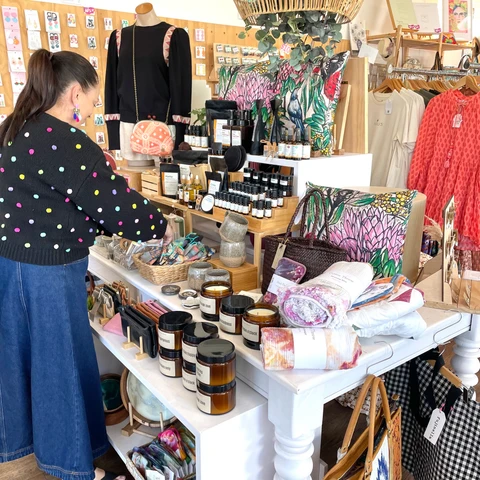
Drawbacks of Small Specialist Stores to Keep in Mind and How to Overcome Them
A specialist store should be chosen because it provides a clear advantage, not because small retailers are automatically more trustworthy.
Prices May Not Be the Absolute Lowest
A smaller retailer may pay more per unit, carry slower-moving stock, or include consultation and setup in the price. It may also offer a competitive price or an exclusive product unavailable elsewhere.
How to Overcome: Compare the complete cost rather than the listed price alone. Include delivery, installation, required accessories, warranty coverage, return shipping, maintenance, and after-sales support. Ask whether advice or setup is included.
Limited Inventory & Fast Sell-Outs
Small stores may have limited warehouse space and less capital tied up in stock. Special orders, seasonal products, or handmade goods may require longer lead times.
How to Overcome: Ask whether the item is physically in stock, expected from a supplier, or available only by pre-order. Obtain the estimated delivery date and cancellation terms in writing. Do not interpret a product page as proof of immediate availability.
Strict Return Policies
Return policies vary by store and jurisdiction. Small businesses may set shorter voluntary return periods or charge restocking fees where legally permitted, but large retailers also apply exclusions to opened, customized, hygienic, or clearance products.
The FTC recommends reviewing the retailer’s return deadline and conditions before purchasing because stores may impose different time limits and remedies.
How to Overcome: Read the policy before payment. Ask separately about change-of-mind returns, defective goods, special orders, opened packaging, and manufacturer warranties. Keep the receipt and written product recommendation.
A small specialist store is a strong choice when product compatibility, category depth, unusual variations, technical guidance, or continuing support matter more than the lowest price or fastest delivery. A global retailer remains useful for standardized products, broad comparison, predictable fulfillment, and frequent discounts. Neither format is automatically better for every purchase.
Before deciding, compare the exact product and ask what the specialist retailer provides that the larger seller does not. That advantage might be a rare model, hands-on testing, installation, repair access, reliable technical advice, or a better selection of compatible parts. Verify stock, warranty authorization, total cost, and return conditions in writing. Choose the specialist store when those benefits materially reduce purchase risk not simply because the business is small.